Elevated + Maze
Apparatus
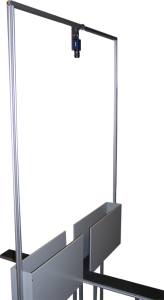
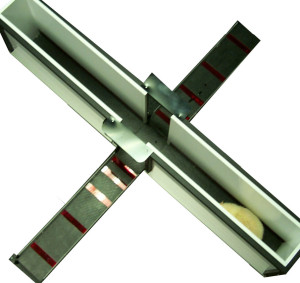
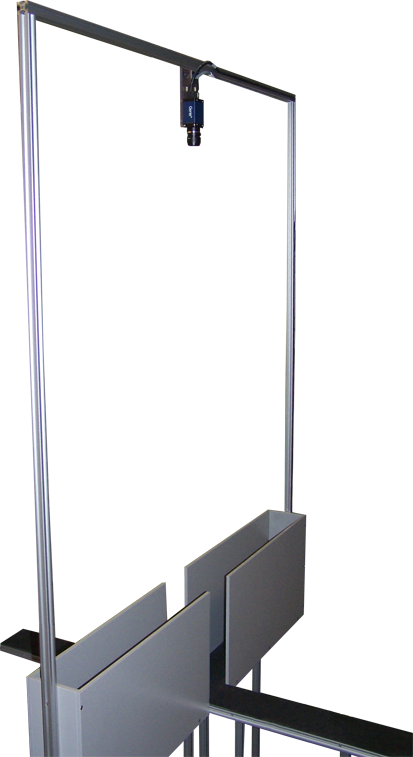
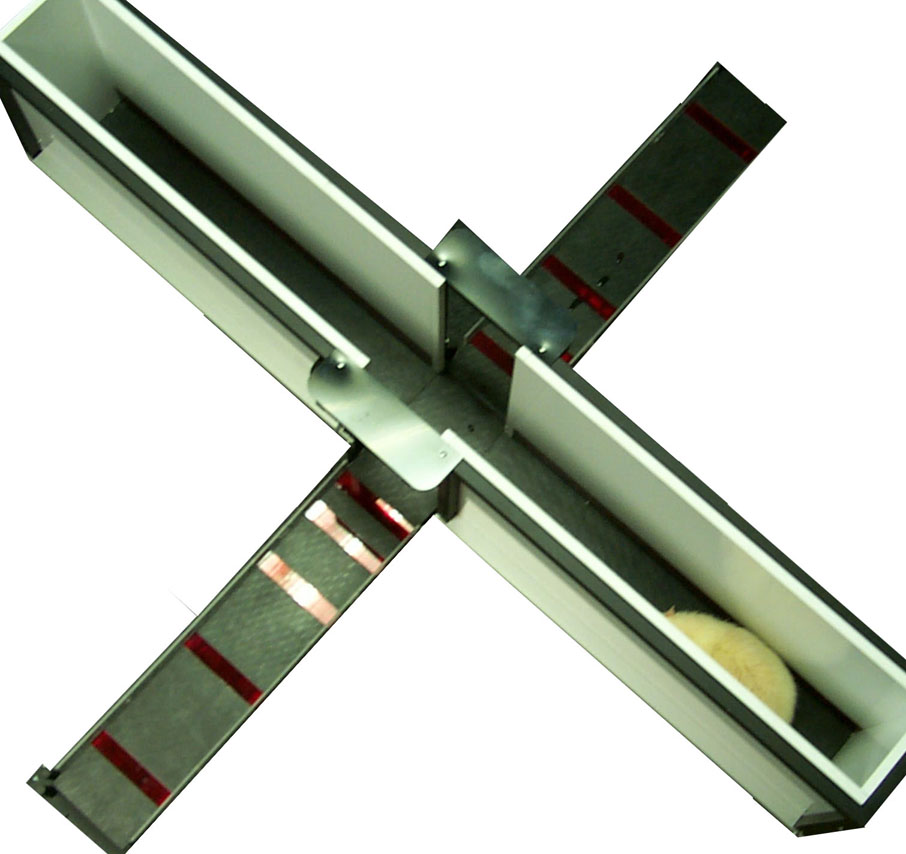
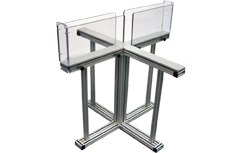
The mobile mechanical structure of our + Maze is made with aluminum. The cross-shaped structure is very easy to dismantle, so that it may be stored against a wall during a unused period. Two arms are open (without walls), whereas the two others are surrounded by walls. The platforms, which are covered with an antiskid rubber layer, are placed 50 cm above the floor.
We propose two technologies to detect the animal: by infrared beams or videotracking.
1) INFRARED beams: this type of detection presents several advantages:
- no configuration needed! The system is independant from the size and color of the animal.
- the luminosity of the room does not impact the quality of the detection. As a consequence, you may change the luminosity conditions without modifying the detection parameters.
- the system is independant from the experimental room and from its context. Thus, you may easily move it from one room to another.
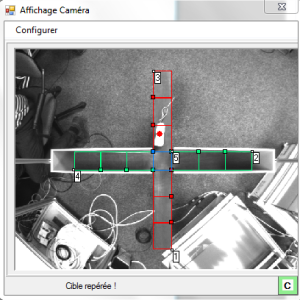
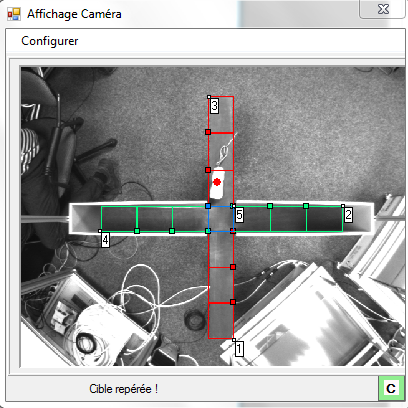
2) VIDEOTRACKING: this type of detection also presents strong arguments:
- the video camera may be used for other experimental tasks. In addition to the videotracking system, it is possible to acquire mechanical structures such as openfields, O Maze, or even Radial Maze, to conduct other behavioral assessments.
- the detection is more accurate. We may obtain a very precise value of the distance travelled, and a picture of the path of the animal in the maze.
- the on-board version of the + Maze is very handy.
This apparatus is connected to an interface that provides the formatting of signals from sensors and allows communication with the computer.
Software
Our experiment management software records the position of the animal, either detected by videotracking or by infrared beams. The location of the animal is displayed in real time, so that the user is always aware of the animal’s behavioral outputs.
On the basis of the data recorded by our software, a module calculates behavioural outputs, such as:
- the nuber of entries in each arm (and at the end of each arm)
- the latency of the first exploration,
- the time spent in each arm (and at the end of each arm)
- the kinetics (per customized time units) of all variables (entries in arms, exploration of the end of the arms, time spent in the arms, etc).
The results are displayed a Microsoft Excel compatible file.